The Wrong Fight: Why Democrats Keep Debating Who They Are Instead of What Things Cost

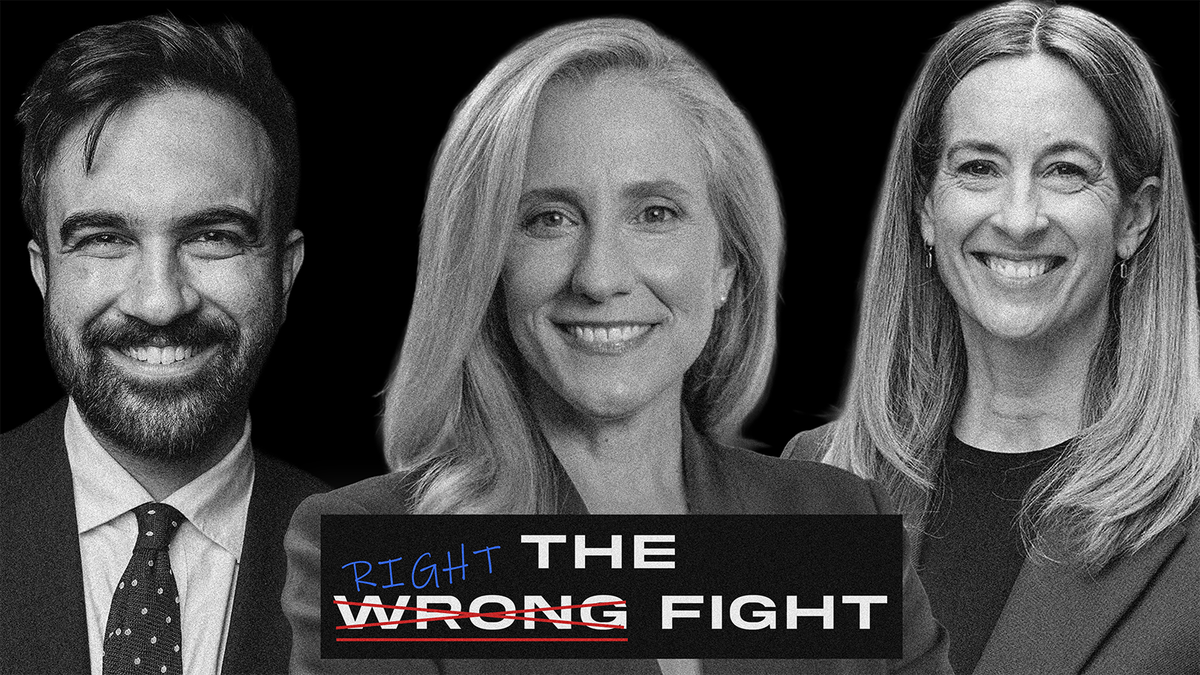
A democratic socialist who wants city-owned grocery stores in every borough. A moderate who just posted the largest raw vote margin in Virginia gubernatorial history. A Navy helicopter pilot who froze utility rates as her first official act in office.
Three candidates. Three wildly different ideological starting points. One identical result: landslide victories built on the same four words. What does this cost?
Zohran Mamdani won New York City with 50.78% in a three-way race — the most votes cast in a NYC mayoral race since 1969. Abigail Spanberger won Virginia by more than 15 points, the largest percentage margin since 2009. Mikie Sherrill won New Jersey by 14.4 points, becoming the first Democrat to carry Morris County since 1973.
So naturally, the Democratic Party responded by launching a furious internal debate about whether it should be more progressive or more moderate.
The 2024 election gutted me. But when I saw the results of these three races, I felt something I hadn’t felt since before Trump was elected a second time: actual hope. Then I watched the party spend three months trying to explain it away — each faction contorting the evidence into proof of whatever they already believed. That part felt pretty familiar. It felt like the stuffy mission statement meeting that has become so synonymous with the Democratic Party brand.
The Mission Statement Trap
If you’ve ever worked at a company that was in the midst of crashing and burning, you’re probably familiar with this. Sales are cratering. Customers are leaving. The product is clearly getting worse. And leadership responds by scheduling a cushy executive offsite to workshop the mission statement. Except the problem was never the mission statement in the first place. The problem is that nobody’s talking about (or listening to) what the customers actually want.
This is what the Democratic Party is doing right now. It’s an exhausting performance of identity theater. Just a compulsive need to resolve an internal ideological question before acting, even when the evidence shows that acting is the resolution. And if you’re politically engaged, you’ve definitely seen the cycle. Party loses, factions point fingers, the media frames recovery as a contest between different wings, primary candidates pick their lane, donors pick sides. The formula that actually won gets buried underneath all the drama.
The San Francisco Chronicle captured the meta-debate perfectly: “Affordability? Abundance? Aspiration? As 2026 looms, which message will Democrats run with?” Meanwhile the New Democrat Coalition just released a 16-page affordability blueprint explicitly positioned against progressive populism — whose actual content is almost entirely about the same kitchen-table costs that progressives are running on. Everyone agrees on the diagnosis. But the party is still fighting about who gets to be the doctor.
Derek Thompson nailed it: He asserts that affordability isn’t one specific policy. It’s just a prompt; a shared orientation toward material reality that lets different candidates answer the same question in whatever way fits their district. The party doesn’t need to resolve its identity crisis. Instead, it needs to stop having one altogether.
The Prompt in Action
Here’s what the factional debate is designed to obscure.
Spanberger won economy-focused voters by more than 20 points. Sherrill didn’t issue a statement about party values -- she froze utility rates. Mamdani ran on a $30 minimum wage, free childcare, and city-owned grocery stores. The DNC’s own internal analysis found that pocketbook concerns “overwhelmingly propelled the party’s recovery among minority voters.” The voter language is telling: “It’s not your mortgage, it’s your rent. It’s not groceries; it’s food. It’s not utilities; it’s heat.”
Now the paradox that proves the thesis. The Democratic Party’s brand is at historic lows. 34% favorable in Gallup (worst since 1992), 27% in NBC (worst since 1990), 18% congressional approval in Quinnipiac. And yet Democrats lead the generic ballot by 5 to 14 points depending on the poll, and hold a 33-point advantage among independents. Only 48% of Democrats approve of their own party’s congressional leaders.
Voters are motivated despite the party rather than because of it. The lesson we’re learning is that the brand itself is irrelevant. The material stakes are everything.
G. Elliott Morris’s analysis found that if the 2026 electorate resembles voters who prioritize affordability, it would produce a blue wave 50% larger than 2018. The party just has to talk about the thing voters already care about. That’s literally it.
Give Me Surgery, Not Aspirin
Time for a little push-back.
James Carville, hardly a progressive, has called for “the most populist economic platform since the Great Depression.” The Nation argues that “affordability” without structural ambition is empty branding; just a way for moderate Democrats to offer technocratic tax credits while claiming the same mantle as candidates proposing universal childcare. A Demand Progress/YouGov poll found that 72.5% of Democrats prefer sharp populist messaging over softer “abundance”-style framing.
The word affordability can certainly be hollow. If it becomes just another slogan concealing pilot programs and means-tested credits instead of real structural reform, voters will see through it. The New Democrat Coalition’s child care “pilot programs” and Mamdani’s universal child care are not the same policy, even if they share the same prompt.
But that’s not the argument. No one is saying that all affordability policies are interchangeable. Leading with material concern is what wins elections. The debate over how to address that concern is a productive policy fight that the party should definitely have. The useful version of the progressive-moderate debate is “which affordability policies work best?” The useless version is yet another round of “who are we?”
The cultural filter is non-trivial here too. Ruy Teixeira and the Liberal Patriot school argue that cultural perceptions function as a filter — voters who think you’re culturally alien won’t hear your economic pitch no matter how good it is. Research cited by The Liberal Patriot suggests roughly two-thirds of working-class voters think Democrats have moved too far left culturally. The general sentiment from pragmatic Democratic operatives like Pat Dennis of American Bridge is clear: economic populism helps, but it isn’t enough on its own to overcome cultural headwinds.
On the cultural point, I personally disagree completely. I don’t think the Democrats have really moved all that far to the left culturally. Instead I think Republicans and their dominant media powerhouse have very successfully painted the average Democrat as a caricature of the most absurd characters on the far-left fringes. Democrats have finally begun to fight on the new media battleground they had previously ceded to the right, but it’s an uphill battle to reverse these perspectives.
What I keep coming back to, however, is that leading with economics is still the best available strategy for managing the Democratic party’s cultural vulnerabilities. Not because it makes the perception vanish, but because it redirects voter attention to terrain where Democrats are strong and Republicans have lost. Spanberger didn’t win by taking the bait and engaging in ridiculous debates about “wokeness.” She instead won by making the conversation about grocery prices, which functionally communicated seriousness without requiring a single culture-war concession.
The 2018 Cheat Code
Democrats didn’t resolve their identity crisis in 2018 either. They didn’t hold a unifying convention or publish a manifesto. They let diverse candidates run on local conditions with healthcare as the shared prompt. Moderates won red districts. Progressives won blue ones. No one agreed on Medicare for All versus a public option, but pretty much everyone agreed that healthcare costs too much.
The result was the largest midterm wave in a generation.
Affordability in 2026 can work identically. The party apparatus itself doesn’t need to be unified. What it needs, as Derek Thompson wrote, is a shared prompt.
And the 2018 model worked despite Republican attacks, same as now. Republicans know that affordability is their Achilles heel, particularly as they’ve ceded their congressional duties during Trump’s second term. The NRCC’s October 2025 memo outlines a strategy to “weaponize Mamdani” — nationalizing his democratic socialism as the face of the party and running digital ads in nearly 50 competitive House districts. But Spanberger and Sherrill won their landslides while those attacks were being deployed. The affordability prompt is finally an offense against Republicans instead of a defense. It forces Republicans to argue against candidates who are talking about grocery prices while they’re still repeating the same anti-transgender talking points every single day.
Nine Months
The Democratic Party’s greatest risk in 2026 is spending so much energy on its internal identity fight that it never actually gets around to running on the thing that’s already working.
The identity debate is a scarcity-mindset trap. It’s fighting a pointless battle over who gets to define the party instead of building coalitions around what voters actually want. And the answer is boringly simple, in the same way abundance politics is boringly simple: build more, cost less, talk about what matters to people’s lives (I know…revolutionary stuff).
Three candidates proved the formula works. The party’s own data confirms it. Morris’s numbers say the wave is sitting there, waiting.
The only question is whether the party will spend the next nine months having the fight that feels satisfying, or doing the work that actually wins.

Thank you so much for reading! If you enjoy my work and want to support me further, one-time tips are always appreciated but never expected.